
Electric cars have been increasing in popularity for being more eco-friendly and cost-effective than traditional gasoline cars. However, the sticker price is not the only factor that determines an automobile’s lifetime cost of ownership. Everything from the cost of purchase to maintenance, power, and depreciation must be considered to make the right decision.
In this article, I will show you how to estimate the overall cost of owning an EV. Based on a cost breakdown and some practical advice, we hope to help you make a decision thatÂ’s less of a financial flop.
Why Assessing Lifetime Costs Matters for EV Buyers?
When weighing an EV, the sticker price can appear steep versus a conventional internal combustion engine (ICE) car. In many cases, EVs enjoy reduced running and maintenance costs that are able to recoup the initial cost of purchase over the lifetime of the vehicle.
Knowing the lifetime costs can help you compare electric vehicles to their gas-powered counterparts more precisely and to not run into surprises down the road. It also ensures you’re taking into account things like energy prices, tax breaks, and resale value, which can all change how much you’re spending and saving.
By looking at the big picture, you can better understand if an EV fits into your budget and lifestyle, not only saving you time and money in the future but also creating positive impacts on the environment.
What Are the Major Elements of EV Lifetime Costs?
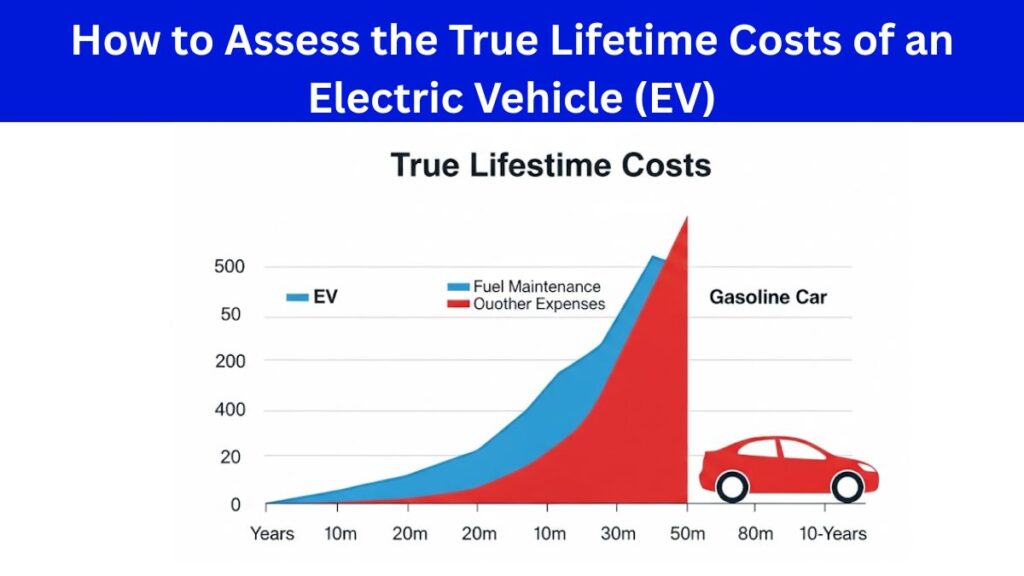
To ascertain the actual lifetime expenses of an EV, you must consider a number of other elements.The main expense categories to take into account are broken down below.
1. Purchase Price and Initial Costs
The initial purchase price of an EV generally exceeds that of a similar ICE vehicle since more electronic gadgets are involved and the cost of a battery is incurred. But prices are increasingly more competitive, with models such as the Tesla Model 3 or Nissan Leaf offering affordable entry into the market. To get an accurate picture:
- Compare Models: Shop for EV models in your budget, including both luxury and economy models.
- Take Note Of Incentives: A growing number of governments provide tax credits, rebates, or outright grants when you buy an EV. For example, in the United States, the federal tax credit can range to as high as $7,500, based on the model and your tax situation.
- Financing Costs: If are financing the purchase, take interest rates into account because they will be added to the total cost.
2. Energy Costs: Electricity vs. Gasoline
The reduced cost of fuel is one of EVs’ biggest pluses. Instead of gasoline, EVs run on electricity, which tends to cost less per mile. To calculate energy costs:
- Estimated Electricy Rates: Look up your local electricity rates (in $/kWh), and guess your miles per year. For instance, an EV that gets 3.5 miles per kWh with a fuel cost of $0.15 per kWh costs roughly $4.29 per 100 miles.
- Compare With Gas: A gas vehicle getting 30 miles to the gallon at $3.50 a gallon will cost about $11.67 for 100 miles.
- Analyze Charging: Home charging is usually less expensive than on-the-road charging. Investing in a Level 2 home charger ($500 to $2,000) could be a money saver in the long run.
3. Maintenance and Repairs
There are fewer moving parts in an EV than in an ICE vehicle, which should translate into lower maintenance. Key considerations include:
- Lower Maintenance Needs: EVs eliminate the need for oil changes, spark plugs and exhaust system fixes, saving hundreds each year.
- Battery Life: EV batteries are supposed to last 10–20 years, but the replacement bill could be from $5,000 to $20,000. This risk is mitigated by the availability of most manufacturer warranties (e.g., 8 years / 100,000 miles).
- Tire and Brake Wear: Because EVs are heavier, they could wear down tires faster. However, part of the costs are compensated by regenerative braking, which reduces brake pad wear and tear.
4. Insurance Costs
EV insurance may be more expensive because of its high technology features and cost of repair. To assess:
- Get Quotes: Shop for insurance on EVs versus ICE. Some insurers offer EV-specific discounts.
- Factor in Safety Features: Electric vehicles frequently have state-of-the-art safety features, which could reduce your premiums.
5. Depreciation and Resale Value
Depreciation impacts the long-term total cost of ownership of an EV. (Some models, such as Teslas, have good resale value, while others may depreciate quicker.) To evaluate:
- Research Resale Trends: Look up resale values for the past 5 or 10 years on sites like Kelley Blue Book to estimate resale value.
- Factor in Demand: As demand for EVs increases, so too may their potential resale values as the market evolves.
6. Extra Costs: Charging and Everything Else
By the way, there could be additional investments to make an EV your own:
- Home Charging Setup: Installing a home charger costs money up front but saves time and money compared with using public charging.
- Accessories: You might also have to pay for things such as charging cables or adapters.
How to Calculate the Total Lifetime Cost of an EV?
Here’s how you can estimate the actual lifetime cost:
- Decide on Ownership Period: How long will you keep this EV (i.e. 8 years or 100,000 miles)
- Figure Purchase Costs: Subtract any incentives from the purchase price; add other costs such as financing.
- Calculate Energy Costs: Multiply your annual mileage by the price per mile (determined by your electricity rate and your EV efficiency).
- Calculate Maintenance: Use industry averages (such as $500–$1,000/year less than ICE vehicles) or manufacturer-provided information.
- Factor in Insurance: Tack on the annual cost of insurance according to quotes.
- Deduct the Depreciation: Deduct the resale worth from the purchase price.
- Include Extra Charges: Add charger installation or accessories if necessary.
For instance, a $40,000 EV with a $7,500 tax credit, $500/year energy costs, $300/year for maintenance, $1,200/year for insurance, and a $15,000 resale value after 8 years might have a lifetime cost of approximately $25,900, not including the cost of financing.
Why Compare EVs to ICE Vehicles?
To give you some perspective, estimating your savings is relative to a standard fuel vehicle. Although EVs cost more initially, lower energy and maintenance expenses typically make them cost-effective in the long run.
Compare specific models using online calculators from, say, the U.S. Department of Energy or Edmunds. For example, over 100,000 miles, an EV might save $8,000 to $12,000 in fuel and service costs compared with a gas-powered car.
What Factors Influence EV Costs Over Time?
Lifetime costs can be influenced by a number of extrinsic factors:
- Cost of Electricity: Charging costs are affected by the price of electricity.
- Policy: Incentives or rebates may also directly affect upfront costs, particularly where tax incentives or rebates are involved.
- Technological Progress: The development of better batteries may lead to lower replacement costs and/or increased capabilities.
- Market Trends: Increasing EV adoption could support resale values.
How to Make an Informed Decision?
To choose the right EV:
- Budget: Think of up-front and ongoing costs.
- Research models: Evaluate efficiency, range, and features.
- Check Incentives: Find federal, state or local EV incentives.
- Charging Planning: Make sure you can charge your phone wherever you are.
- Seek Professional Opinions: Research trusted publications or forums like Consumer Reports or EV forums.
Conclusion
The all-in cost of ownership for an EV also includes the purchase price, energy, maintenance, insurance, and depreciation, among other factors. If you know the factors that determine the cost of solar, you can make a fiscally responsible decision that matches your budget and priorities.
Electric vehicles can, in many cases, bring about savings over time, especially in the case of both fuel and maintenance, but a long-term plan is necessary. Follow the steps explained here to determine expenses and compare models, so you end up with an EV that meets both your financial and environmental needs.
Disclaimer: The information provided is based on general trends and averages as of July 2025. Always consult local regulations, current market data, and professional advice for personalized decisions.