
There is a revolution taking place in the electric vehicle (EV) market, driven by upcoming new entrants that appear to threaten the hegemony of their better-established counterparts. Make no mistake, demand for clean transportation is climbing all over the world, and these EV startups are making no secret of the fact that their technology and business models are giving them large slices of the market pie. But how, exactly, are these upstarts taking on venerable giants such as Toyota, Volkswagen and General Motors?
This article discusses the tactics, the strengths and the challenges that these EV startups have faced as they fight to reshape the automotive world.
Why Are EV Startups Gaining Traction?
The growth of EV startups is informed by a convergence of market drivers and consumer demand. The first is that climate change is driving global demand for zero-emission vehicles, providing the pipeline that a startup whose sole focus is EV can mine.
Unlike legacy carmakers that tend to hedge in favor of internal combustion engine (ICE) vehicles and dither around with a few EV offerings, the new kids (or new energy companies) on the block like Tesla, Rivian, and Lucid Motors, are dedicated to electric transportation, which gives them a very clear, laser-sharp focus.
Furthermore, the development of battery technology and reduced fabrication cost have also broken their own barriers. Battery prices fell by almost 90% from 2010 and are now low enough to make it viable for a host of startups to produce affordable electric vehicles at scale, according to BloombergNEF.
Government incentives like tax credits in the U.S. and subsidies in Europe helping to level the playing field also mean that startups can offer appealing pricing.
It’s also a function of consumer behavior. Younger customers, including Gen Z and Millennial buyers, place a premium on sustainability and technology, values that EV startups share. These firms are selling themselves as forward-thinking disruptors, and they are targeting eco-conscious, tech-savvy drivers.
How EV Startups Can Set Themselves Apart?
Innovative Technology and Design
EV startups can be at the forefront of innovation, without the albatross of history. For instance, it is tough for rivals to match Tesla’s over-the-air software updates, advanced driver-assistance systems and sleek designs.
Companies like Lucid Motors stress efficiency, and the Lucid Air is rated at more than 500 miles by the Environmental Protection Agency, a figure that betters what is available from many traditional car builders.
Start-ups also try out radical designs and features. The R1T electric pickup truck from Rivian targets outdoor enthusiasts, a market that traditional automakers have been sluggish to enter, by combining luxurious features with tough practicality. Startups generate brand loyalty by offering unique value propositions to certain demographics.
Direct-to-Consumer Sales Models
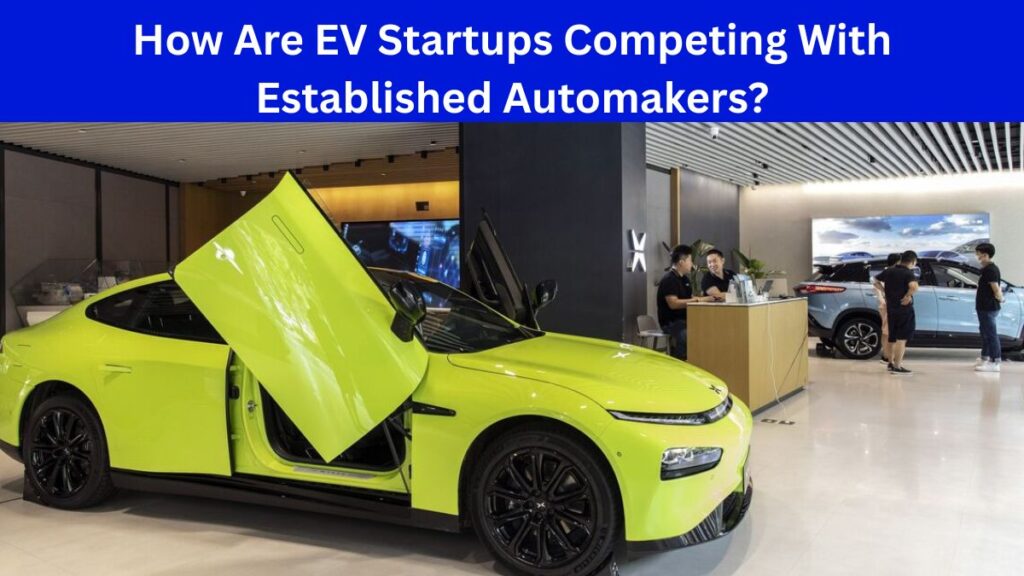
While traditional automakers are based on a dealership network, several startups work on a direct-to-consumer (DTC) sales model. Tesla led the way with this approach, selling cars mostly online and via company-owned showrooms and bypassing third-party dealers to offer transparent pricing.
This is a great way for startups to own the customer experience beginning from the purchase and extending through the delivery, which helps to build trust and repeat purchases.
The DTC model additionally allows startups to capture important data about consumers’ desires, which in turn helps to shape product development and marketing. Established carmakers, hamstrung by franchise laws and dealer networks in most places, struggle to replicate that agility.
Sustainability and Brand Mission Another area to consider
EV startups typically wrap their brands in notions of sustainability and innovation. NIO, a Chinese electric car startup, touts eco-friendly manufacturing and battery-swapping technology in hopes of winning environmentally conscious customers.
For its part, Fisker markets its lineup of vehicles as “the world’s most sustainable,” which is based on using recycled materials as part of its design.
It is this mission-led branding that appeals to consumers, who begin to see their purchase in vehicles as a reflection of their beliefs. In some stark contrast, legacy automakers, who have built ICE vehicles for decades, sometimes find it hard to reorient themselves and their brand identity to be in line with the green movement.
Agile Manufacturing and Partnerships
Lean operations are advantageous for startups, as are partnerships. Rivian, for example, has a deal to produce electric delivery vans for Amazon, securing a significant revenue source while ramping up production.
Likewise, Canoo’s focus on subscription-driven mobility services brings it closer to urban households, and its modular, multi-use EVs would target these consumers.
By outsourcing peripheral processes or working with the tech giants, start-ups can concentrate on innovation and getting to market quickly. Traditional manufacturers, who have deep supply-chain networks and legacy infrastructure, can take longer to develop products.
What Challenges Do EV Startups Face?
But while there’s wind at their back, it’s tough sledding for EV startups challenging established carmakers.
Production Scalability
Most of the start-ups are facing challenges in scaling production. Today, Tesla is a market leader that clearly endured well-documented “production hell” during its early years.
Newer entrants such as Lordstown Motors and Bollinger have also had difficulty hitting their delivery timelines, which has raised questions around reliability.
Traditional car companies, which have years of experience manufacturing autos and global supply lines, have a strong leg up in mass production.
Financial Constraints
EV start-ups need a lot of money for R&D, production and marketing. Venture capital and IPOs give startups their initial cash, but many struggle with cash flow.
For that matter, Faraday Future has struggled to stay afloat despite grand plans. Legacy automakers, with diverse revenue streams and established access to credit lines, can better withstand market gyrations.
Brand Recognition and Trust
All those decades of brand and customer haven’t disappeared for established automakers. Companies such as Ford, with its electric Mustang Mach-E, draw on their history to win over loyal customers. Startups have to spend a lot of marketing dollars to create brand presence, an expensive proposition that can overtax smaller budgets.
Regulatory and Market Barriers
Start-ups are daunted by the byzantine nature of automobile regulations, safety standards and international trade policies. Car companies have compliance officers, but new entrants wind up using consultants, adding to cost.
As they’ve leached out, and stimulus money still hasn’t come, new doors have opened, like more focus on the U.S. market and investment there due to protectionist policies in some markets making it even harder in other countries for foreign startups.
How Are Established Automakers Responding?
Legacy automakers aren’t sitting still. A number of them are spending hundreds of billions making the move to EVs. Volkswagen’s ID series, Ford’s F-150 Lightning, and GM’s Ultium platform are evidence of serious electrification commitments.
They use brute force manufacturing capabilities, worldwide distribution, and brand recognition as weapons.
Meanwhile, traditional auto manufacturers are embracing startup tactics. Ford, for instance, has formed tie-ups with tech companies for software know-how, while GM is testing direct-sale models in some regions. Legacy automakers are hoping to regain lost market share by combining their scale and startup-like innovation.
What Is the Future of EV Startups?
The battle between EV startups and traditional automakers rages on, sort of. And while start-ups will no doubt continue to disrupt the sector with audacious innovations, doing so without the realities of production and finance is a real tough ask.
Strategic partners, like tech companies or battery manufacturers, could be the resources required to scale.
At the same time, legacy carmakers are speeding up their strategies around EVs as they close in on, if not catch up with, the upstarts. The winners in this race are likely to be the firms that combine advanced technologies, production efficiency and strong consumer trust.
How this Competition Benefits Consumers?
The competition between EV startups and traditional car companies leads to more innovation, better value and more choices. Start-ups lead the way in design and technology; traditional players in reliability and scale.
The result is a rich ecosystem that provides greater choice, with high-quality EVs available at competitive prices for consumers.
For instance, the strong demand for longer battery ranges and fast charging has driven advancements that are advantageous to all EV drivers. And with all kinds of models available, from luxury sedans to rugged trucks, there’s an option for every lifestyle.
Conclusion
New electric vehicle companies are disrupting the car industry with technology, sustainability, and consumer-focused business models to take on traditional carmakers. Cleave); with significant challenges ahead of them, their flexibility and ability to innovate could see them become tough rival players.
As the traditional carmakers find the EV religion and plow money into it, the industry stands on the verge of an epochal shift, and consumers are about to get the benefits of this electrified surge.
This article is designed to give you the facts you need to make known and reliable conclusions about the EV business today, based on the facts and figures.
Also Read: