
The electric vehicle (EV) market has had unprecedented growth globally, with China becoming the world’s largest EV market. More than half of all EV sales worldwide are made in China, where there are millions of EVs on the road. This is an outstanding achievement and is due to careful government policies, large-scale development of infrastructure, and a flourishing domestic manufacturing sector.
This article focuses on the ways China became and remains the world leader in EVs and what that means for other nations looking to follow suit.
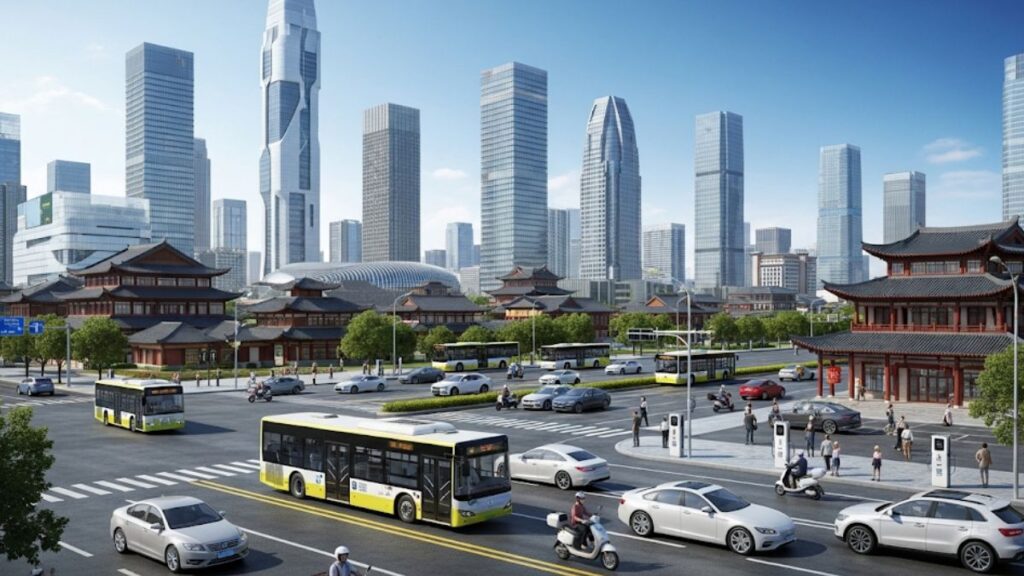
Why China Prioritized Electric Vehicles?
China’s road to becoming the world’s leader in EVs started with a frank acknowledgment of its environmental and economic predicaments. In the late 20th and early 21st centuries, rapid industrialization and urbanization caused serious air pollution in big cities such as Beijing and Shanghai.
As a sector that depended a lot on the use of fossil fuel, transport was one of the primary causes of smog and greenhouse gas production.
In response to these challenges, the Chinese government has recognized that EVs are part of the solution to reduce pollution and the dependence on foreign oil.
There was also a push toward EVs and China’s desire to be the leader in new technologies and to reduce its carbon intensity in step with global climate goals.
In prioritizing EVs, China sought to address public health issues, improve its energy self-reliance, and stake its claim as a world leader in the auto industry.
How Policy Shaped Sales of Electric Cars?
Generous Subsidies and Incentives
A cornerstone of China’s EV success has been its aggressive government support. China has also offered various forms of EV subsidies and incentives since the early 2000s to increase consumer affordability of the vehicles.
These have included purchase subsidies, tax incentives, and rebates that have made EVs much more affordable than fuel-burning vehicles.
For example, from 2010 to 2020, purchasers of electric vehicles could qualify for rebates of as much as $8,000 per vehicle, depending on the model and the size of its battery.
Such monetary inducements rendered EVs attainable for a larger population, incentivizing demand and prompting producers to ramp up manufacturing.
Regulatory Mandates and Quotas
China also used subsidies in conjunction with regulations so strict that they effectively forced automakers toward electrification. The New Energy Vehicle (NEV) quota system was introduced in 2018, where carmakers that don’t meet the quota are penalized.
This policy forced domestic and foreign car manufacturers to invest heavily in EV production to fulfill quotas, driving market growth further.
Local governments also sweetened the pot, offering benefits like free or discounted license plates for EVs in cities where traditional auto license plates are highly rationed.
For instance, in Shanghai, getting a license plate for a gasoline-powered car can cost more than $15,000 and entail long waiting times, whereas E.V. owners frequently receive plates for free.
What Built China’s EV Infrastructure?
Extensive Charging Network
One of the biggest deterrents to electric vehicle adoption is a solid charging infrastructure, and China has spent billions constructing just that in one of the world’s largest charging station networks.
China has considerably more public charging stations than any other nation by 2024—more than three million. The government and private companies, including State Grid, and private players like NIO, all contributed to the effort to install chargers in urban centers, on highways, and at residential complexes.
This network is a solution for range anxiety fueling so many consumers’ hesitation to switch to an EV; with it, the electric car becomes both a viable and cost-effective option for urban commuters that occasionally need to take trips out of town. A
nd innovations such as battery-swapping stations, introduced by companies like NIO, mean drivers can quickly swap dead cells for fully charged ones in minutes, bringing even more convenience.
Urban Planning and Incentives
In China, EVs have also been pushed through urban planning. Several cities have EV-only zones where parking and recharging are easily available. In urban areas, local governments provide incentives like bus lane access and exemptions from driving bans that make EVs a desirable option for city commuters.
How Domestic Manufacturers Fueled Growth?
Rise of Local Brands
China’s EV market is dominated by homegrown companies like BYD, NIO, Xpeng, and Li Auto, which have become global rivals.
These manufacturers have been able to utilize state support and a read on their local market to create low-cost, high-quality EVs specifically designed for Chinese consumers. Affordable models like BYD’s Qin and Han have taken big portions of the market, as NIO’s premium vehicles attract wealthy buyers.
These manufacturers benefit from China’s robust supply chain for electric vehicle components, batteries in particular. Over 70% of the world’s lithium-ion batteries are produced in China, and major players in the sector include CATL and BYD.
This battery preeminence secures a reliable source of low-cost, high-quality batteries for domestic EV producers.
Innovation and Cost Competitiveness
Innovation has been at the center of ”Chinese EV manufacturers’ “efforts to remain competitive. They have implemented cutting-edge technology like ADAS (advanced driver’s assistance system), over-the-air software updates, and intelligent connectivity features that excite the tech-savvy customers.
Besides, scale and local production enable Chinese companies to sell EVs at lower price levels compared to many international rivals.
Why Foreign Automakers Followed Suit
The country’s huge market potential and strict rules have drawn the likes of Tesla, Volkswagen, and BMW to invest heavily in China. Tesla’s Gigafactory in Shanghai, which began production in late 2019, already cranks out hundreds of thousands of vehicles each year to meet demand both at home in China and abroad.
The popularity of international companies in China emphasizes how important the market is and how the government shapes it.
Foreign automakers are also catering to local tastes by introducing models with longer ranges and features that are customized to Chinese consumers’ demands. Deals with local players, such as Tesla with CATL for batteries, have only reinforced their place in the market.
What Challenges Lie Ahead?
China’s EV market, for all its success, is not without its challenges. Recent subsidy cuts have forced manufacturers to keep costs down. Moreover, competition becomes tougher with increasing newcomers, which may result in overcapacity and price competition. Physical infrastructure expansion also needs to be able to keep up with increasing EV ownership, or else there will be bottlenecks to being able to charge.
Another challenge is associated with environmental issues in battery production, including lithium and cobalt mining, for example. China is doing so by investing in battery recycling and researching new battery chemistries, but it is not complete yet.
How China’s Model Offers Inspiration for the World
There are important lessons that can be learned from China’s leadership in the EV market for other countries. Its outcome demonstrates the significance of government leadership in establishing policy targets and financial incentives and in developing infrastructure. Public-private partnership has been crucial to scaling production and use.
In addition, the emphasis of China on developing domestic innovation with open arms to foreign investment also reflects a balanced posture toward market expansion.
Countries seeking to grow their EV markets can learn from China’s focus on cost, infrastructure, and the supportive policies needed to lure in consumers.
Conclusion
China has become the world’s largest EV market because of its strategic vision and execution. The nation expanded their automotive footprint from regulatory policies, infrastructure buildout, and a strong domestic manufacturing industry, as China overtook the rest of the world in the adoption of electric vehicles.
As the world grapples with a sustainable future, China’s struggle provides a road map others can follow. By continuing to innovate and tackle challenges, China stands to lead the global EV market for years to come.