
The growing EV market is thriving, with model year 2025 set to bring a flood of new models packed with the latest tech, additional range and more choices to suit every lifestyle. Looking for just the right new electric car can be overwhelming, but if you consider important factors such as how far you’ll drive, where you’ll charge, and what you have to spend, you can find the right electric vehicle to fit your needs.
This expertly compiled guide will take you through right upcoming electric car in 2025 necessary steps so that you do not become a statistic and find yourself with a watch that doesn’t live up to your own priorities.
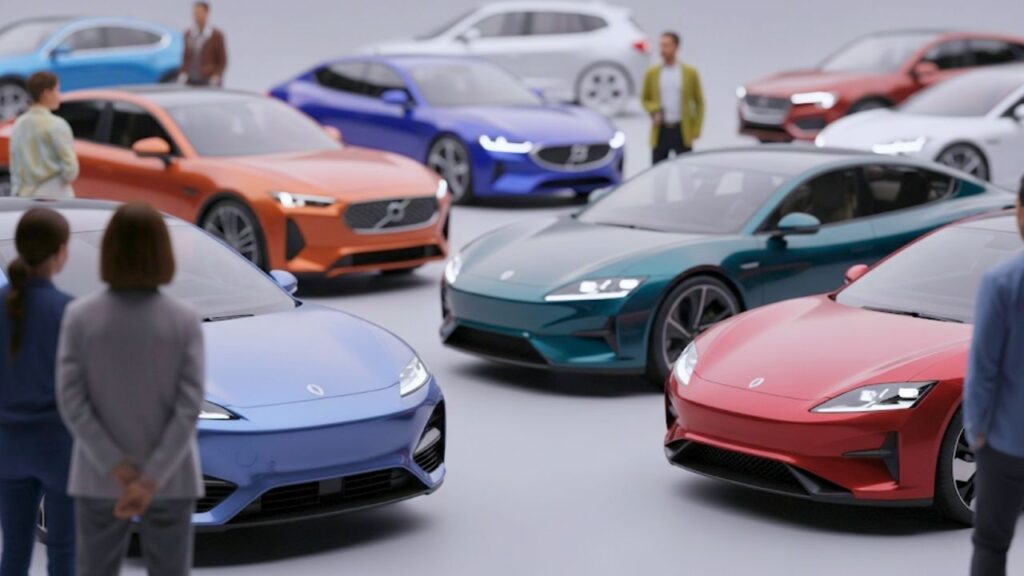
Why 2025 Is the Perfect Year to Buy an Electric Car?
The 2025 EV landscape is more electrifying than ever. The above statistics from the International Energy Agency showed that global electric vehicle sales exceeded 17 million in 2024, up 25 percent year-on-year. It’s believed this growth trend is likely to continue, as automakers including Tesla, Hyundai, Polestar and Chevrolet debut new models with the most advanced automotive technology.
Better battery technology, faster charging and growing charging networks mean EVs are more practical, and government incentives in many areas can drive costs lower. With all those choices, it’s important to know what’s most important to you in order to choose the right car.
What Factors Should You Consider When Choosing an EV?
Choosing the right electric car entails consideration of a number of important factors. Here are the key factors to consider to help you make the right decision.
1. How to Assess Your Budget?
Your budget is the base upon which your EV purchase rests. By 2025, EVs will span the price scale from affordable (the Chevrolet Bolt — about $35,000) to luxurious (the Polestar 5, which is expected to be priced at $80,000). Take into account not only upfront cost, but also potential cost savings from tax credits, rebates, and lower fuel and maintenance costs.
For instance, high-mileage drivers in particular can save a lot of money on fuel with an EV instead of a traditional gas-powered vehicle. Always be sure to see what local or national incentives are available in your area, as that can knock off thousands from the effective cost.
2. What Are Your Driving Needs?
Also a part of the equation are your daily driving habits, a factor that helps determine which EV is right for you. Ask yourself:
- How far do you drive daily? For city commuters, a small EV, such as the Renault Twingo E-Tech with a range of 190 miles, would be enough. For long-distance travelers, there are models like the Hyundai Ioniq 9, with a range of up to 385 miles.
- What type of driving do you do? Urban commuters might choose smaller, nimbler EVs such as the Nissan Leaf; families or adventure-seekers could be more inclined to an SUV, such as the Kia EV9.
- Do you need performance? If you are more interested in speed, two good choices might be the Polestar 5, which offers more than 800 horsepower, or the Dodge Charger Daytona.
Aligning the car’s range and its features to your lifestyle guarantees you get the best possible value for your purchase.
3. Why Is Charging Infrastructure Important?
Convenience of charging can make or break your EV experience. Charging networks are growing in 2025, with more than 23,000 DC fast charge points installed in some regions. Evaluate:
- Home charging options: For most EVs, a Level 2 charger (40 amps or higher is recommended), which provides faster charging than Level 1. Make sure your home’s electrical system can handle it.
- Public charging infrastructure: Find fast-charging stations convenient to where you live, work or play. Services, such as ChargePoint, or apps such as the one developed by Tesla, can help you find available chargers.
- Charging speed: There are models like the Hyundai Ioniq 5 that allow for ultra-fast charging whereby the battery gets recharged in less than thirty minutes, a feature that’s perfect for travelers.
For those of you living in an area where you might have limited charging infrastructure, perhaps an EV with a larger range, or even a hybrid like the Scout Harvester, which has a gas generator for extended range, would be a better choice.
4. How Do You Evaluate Technology and Features?
Today’s electric vehicles are loaded with advanced technology, from driver-assistance features to over-the-air updates. When choosing an EV, prioritize:
- Safety features: Search for auto-braking, lane assist, as well as high safety ratings, such as those that appear in the Chevrolet Equinox EV.
- Infotainment and connectivity: Dual screens, voice controls, and smartphone integration are here to stay in models like the Tesla Model 3 and Hyundai Ioniq 6.
- Special features: Some EVs, including the Ioniq 5, have vehicle-to-load (V2L) capabilities that can power additional devices.
I find it’s best to physically test-drive models to get a feel for the tech features IRL.
What Are the Top Upcoming EVs for 2025?
The following is a selection of some of the most eagerly anticipated electric cars for 2025, to suit various needs and budget:
1. Chevrolet Bolt (Next-Gen)
- Price: Starting around $35,000
- Range: Up to 259 miles
- Why Choose It? Cheap, small and lightweight, the Bolt utilizes lithium-ion phosphate batteries to keep costs cheap, which is perfect for someone on a budget.
- Best For: City commuters; small families.
2. Hyundai Ioniq 9
- Price: $50,000–$70,000 (est)
- Range: Up to 385 miles
- Why Choose It? Fast charging, huge, family-friendly SUV loaded up with cutting-edge tech such as augmented reality HUD.
- Best For: Families and frequent long-distance travelers.
3. Polestar 5
- Price: From $80,000 (est)
- Range: 310 miles (est)
- Why Choose It? A high-performance, sexy coupe with sustainable/recycled materials and 800-plus horsepower.
- Best For: Power lovers, who also like the lap of luxury.
4. Renault Twingo E-Tech
- Price: Below $17,000
- Range: 190 miles
- Why Choose It? Cheap and cool, ideal for the broke city driver.
- Best For: Novice EV owners and urbanites.
5. Dodge Charger Daytona (Four-Door)
- Price: $60,000–$80,000 (est)
- Range: 300 miles (est)
- Why Choose It? Blends muscle-car style with electric performance and provides an exciting ride.
- Best for: Ideal for those among us who love performance and families who need extra space.
How to Compare EVs Effectively?
To help narrow it down, make a comparison list:
- List your priorities: Budget range size performance tech.
- Research reviews: Look for expert and user reviews on sites such as Car and Driver or ElectricCarUse for real-world experiences.
- Estimate your needs: Go to dealers and test the handling, comfort, features, etc.
- Compare total costs: Add up purchase price, incentives and on-the-road savings.
Comparison tables by range, price and features can make your decision easier. The Hyundai Ioniq 9 has more range than the Chevrolet Bolt — but retails for a higher price.
Why Should You Consider Sustainability?
Electric vehicles are by nature more sustainable than gas-powered cars, with lower emissions and fuel costs. By 2025, brands like Polestar are highlighting the use of eco-friendly materials.
While Norway’s near-total electrification demonstrates the environmental impact of mainstream EV adoption. Think about how your choice matches your values, especially if sustainability is an issue.
What Are the Risks to Watch For?
As exciting as 2025 EVs are, here are some problems to look out for:
- Launch delays: New models could see production or delivery delays.
- Price fluctuations: Tesla’s price slashes in 2024 are a reminder that EV prices may not follow any one model.
- Charging infrastructure gaps: In some areas, charging stations can still be hard to come by, impacting convenience.
Keep up to date by following reputable sites like Electrifying.com or InsideEVs for the latest on release dates and market developments.
How to Make Your Final Decision?
To choose the right EV:
- Set a budget and stick to it. Consider incentives and long-term savings.
- Get a car that fits your life. Focus on range, size and features for your driving style.
- Research and test drive. Rely on expert reviews and hands-on experience to validate your selection.
- Check charging options. Make sure you have access to dependable home or public charging.
- Stay updated. Stay tuned to EV news for the latest about launches and incentives.
By examining elements commonly used by other journalists and even some industry experts, you’ll be well on your way to an EV that will serve you well into 2025, and leave you with a smile on your face.
Conclusion
Picking the best upcoming electric car in 2025 for you is about matching up your driving needs, preferences, and budget with the latest models. From the budget-friendly Renault Twingo E-Tech to the high-performance Polestar 5, there’s an EV for every driver.
By considering range, charging infrastructure and technology, and by getting information from trusted sources, you can make a clear-headed, well-informed decision. Kick start your EV journey today and drive the future of sustainable driving.