
The electric vehicle (EV) revolution is well underway globally, with carbon emissions and climate change in desperate need of combatants. Although developed markets have been the front-runners over the years, emerging markets are now fast expanding the uptake of EVs, as the numbers demonstrate growth in 2015 alone. These areas are using government incentives, cheap EV options, and better-designed infrastructure to remake their transportation ecosystems.
This article will look at the top 10 emerging markets for EV adoption in 2025 and examine why some of these are performing well, discuss the barriers they are facing, and discuss what sets them apart.
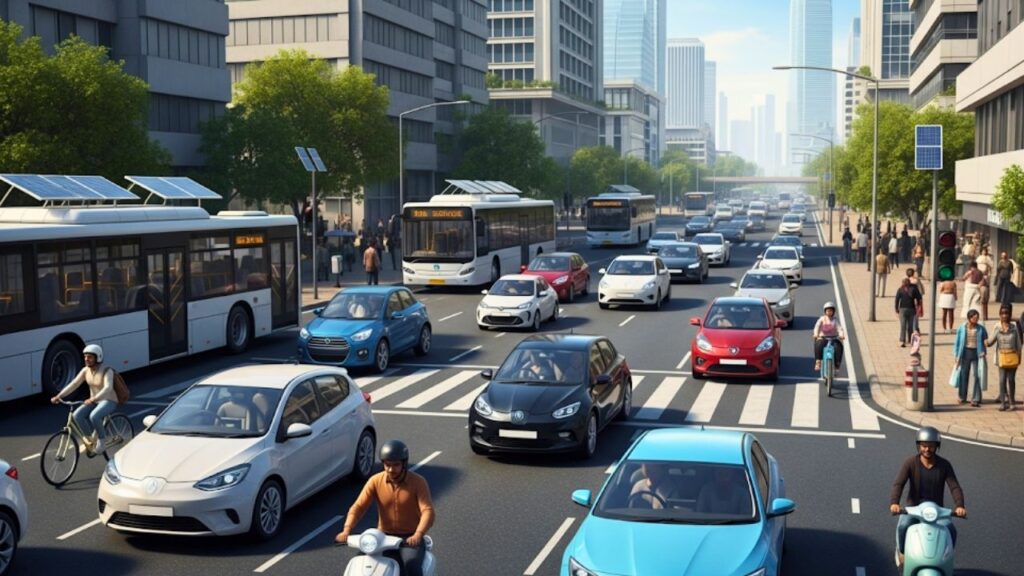
Why Emerging Markets Are Key to the Global EV Revolution
Developing countries are central to global climate efforts, as they are major contributors to global greenhouse gas emissions.
Transportation is accountable for an estimated 22% of global CO2 emissions, so transitioning to EVs is a critical part of the process of achieving a sustainable future. Urbanization in emerging markets is accelerating, the purchasing power of the middle class is growing, and greener imperatives are on the ascent, resulting in a prolific growth environment for EVs.
By 2025, they not only are driving EVs but also are making sure they contribute to the global supply chain through batteries and critical mineral mining.
How Emerging Markets Are Driving EV Adoption
There are multiple reasons for the rise of EVs in the developing world:
- Government Stimulus: EVs become more affordable with subsidies, tax breaks, and lower import duties.
- Low Cost Version: Local versions of Chinese and OEM products and local manufacturers made affordable for the local market.
- Infrastructure Growth: The development of charging networks is helping to alleviate range anxiety and increasing accessibility.
- Environmental Pressures: Urban pollution and dependence on imported fossil fuels are forcing governments to make clean energy a priority.
Top 10 Emerging Economies Drivind the Adoption of Electric Vehicles in 2025
Here, we take a look at the 10 promising emerging markets that are “expressing themselves” with strong sales growth, policy support, and market trends by 2025:
1. China: The Global EV Powerhouse
China will remain the unchallenged leader in the global EV market, having accounted for more than 35% of domestic car sales as electric by 2023, beating its 2025 national goal of 20% of new energy vehicles (NEVs).
By 2025, China is expected to represent nearly 60 percent of worldwide purchases of EVs, thanks to strong government support, a growing network of charging stations, and manufacturers such as BYD. Low-cost options, like the BYD Seal, appeal to a wide demographic, and city laws aimed at curbing air pollution further support adoption.
2. India: Accelerating with Affordable EVs
India’s electric vehicle market is on the rise, with sales of electric cars climbing towards 35,000 in Q1 2025, an increase of 45% year-on-year. The government has really pushed local manufacturing of batteries and encouraged such transition with incentives such as reduced GST rates to 5% (from 28%) on the EVs, which has made products like MG Motor’s Comet EV (priced at USD 9,700) affordable to budget-sensitive consumers.
Growth is further being driven by investments in charging infrastructure and policies that require BS-VI emission standards.
3. Brazil: At the Fore of Latin America’s Push for EVs
EV sales in Brazil spiked 40% in Q1 2025 with over 30k units. While the EV 3.5 program that rewards local vehicle production has drawn the likes of Geely and other Chinese OEMs; import tax exemptions are due to be phased out by the end of 2025.
Prices and rapid sales growth show that Brazil is the type of market that can accommodate cheap EVs due to the country’s urban pollution problems and gradually expanding middle class.
4. Vietnam: A Southeast Asian Trailblazer
In Q1 2025 Vietnam’s EV sales almost quadrupled to nearly 35,000, kicking off an EV boom across Southeast Asia. Homegrown manufacturer VinFast is gaining market share with the help of government policies providing tax breaks and subsidies.
Intense urbanization and pollution in Vietnam are fueling demand, echoing the abundant imports from China that have helped keep prices affordable.
5. Thailand: Southeast Asia’s EV Hub
Thailand is still the largest EV market in the Southeast Asian region, despite a 10% slump in sales in 2024. In 2025, sales are recovering, supported by the Chinese imports (accounting for 85% of EV sales) and policies like the EV 3.5 program, a predecessor to the current one, which in effect requires domestic production to be eligible for subsidies.
Thailand’s emphasis on reducing fossil fuel dependency and on broadening charging infrastructure places it as a regional leader.
6. Indonesia: Tripling EV Sales
Indonesia Three-time increase (EV sales share: 7%) in 2024 as the result of a decrease of the VAT rates (from 11% to 1%) as well as local manufacturing support.
By 2025, low-cost models from companies like China’s Geely and Malaysia’s Perodua, such as the $18,000 e.MAS 7, are emerging. The urban expansion and environmental policy of Indonesia are catapulting the electric vehicle adoption.
7. Colombia: Doubling Down on EVs
EV sales in Colombia doubled in 2024 helped by tax incentives and plans to hike import tariffs on hybrid vehicles to favor BEVs. The country remains on a fast growth track in 2025, propelled by urban demand and government initiatives to support cleaner transportation. Colombia’s dedication to 100% zero-emission bus sales by 2035 is another sign of its EV aspirations.
8. Costa Rica: One of the First in Central America
Costa Rica also experienced the sales of EVs doubling in 2024 due to tax exemptions and an emphasis on integrating renewable energy. It’s 2025, and the nation’s clean energy grid enables EV charging, positioning itself as a sustainable mobility model for other developing countries.
Costa Rica, due to its small size and urban concentration, is another suitable candidate for EV uptake, especially given the growing trend for the same.
9. Chile: Leading in Electric Buses
Chile’s EV market is supported by its leading role in lithium production (accounting for 15% of the global supply) and a strong agenda for the electrification of public transport. Chile is targeting 100% of all vehicle sales for public transport to be zero emission by 2035, and cities like Santiago are already using electric buses.
EV sales are rising steadily in 2025, the result in part of investments made by Tesla and Korean battery makers.
10. Mexico: Being Born as a Manufacturing Hub
Tesla Mexico is becoming an EV manufacturing hotbed, and Tesla’s planned gigafactory in the country is anticipated to create thousands of jobs. EV adoption is still budding, though sales are growing in 2025 on urban demand and connectedness with the U.S. market. – Government incentives and nearshoring trends are lining Mexico up be a major player in the EV supply chain.
What Challenges Do Emerging Markets Face?
And for all that progress, the emerging world still has obstacles to overcome in EV adoption:
- Affordability: High initial costs continue to discourage more consumers, particularly in lower-income economies.
- Charging stations: In many rural regions, there simply is not the infrastructure for charging stations making an EV lifestyle less practical.
- Grid Reliability: Uneven availability of electricity in some markets inhibits charging opportunities.
- Consumer Education: The benefits to the earth and the economically cost-effective nature of sustainable building must be made clear to consumers.
Governments and suppliers are dealing with these obstacles through subsidies, public-private partnerships, and consumer education programs.
How These Markets Will Shape the Future?
What this burgeoning of EVs in emerging markets signifies is essentially a transition to sustainable transportation. By tapping into local production, low-cost models, and adding renewable energy to the mix, these countries are mitigating emissions while promoting growth.
For example, domestic production in Brazil, Indonesia, and Mexico is a job creator as well as a source of import cost savings, while China’s worldwide dominance of battery production undergirds global supply chains.
What Investors and Consumers Do?
These markets provide investment opportunities in EV manufacturing, battery production, and charging infrastructure for investors. That means less contamination, less pollution, and a healthier population for consumers.
These markets drive EV adoption at scale while also contributing to global climate ambition and therefore are a critical component for the fight against climate change.
Conclusion
The following top ten emerging markets for EV adoption by 2025—China, India, Brazil, Vietnam, Thailand, Indonesia, Colombia, Costa Rica, Chile, and Mexico—are ahead of the curve in terms of sustainable mobility.
These countries are overcoming obstacles and spurring growth through forward-looking policies, inexpensive EVs, and infrastructure investment.
By electrifying transportation, they are helping lay the groundwork for a more sustainable future around the world and demonstrating how developing markets can drive the global EV revolution.