
The electric vehicle (EV) is transforming the transportation industry; it is environmentally sound and contains state-of-the-art technology. But electric vehicles come with significantly different maintenance requirements than gas-powered cars.
With care, you can keep it in good condition as well as keep your home safe, long-lasting, and efficient, and get the most from your investment.
This guide will cover some of the best way to maintain your electric car, so, without further ado, let’s jump into what you can do to keep your EV in tip-top condition.
Why Maintaining Your Electric Car Matters?
Compared with internal combustion engine (ICE) vehicles, EVs feature fewer moving parts, which minimizes some types of maintenance, such as oil changes. But they still need to be taken care of on a regular basis to perform well, last long, and for safety. Proper maintenance can:
- Extend Battery Life: The battery is the heart of an EV, and its pack’s health dictates how far it can go before recharging and how well it filters energy to its motors.
- Prevent Safety Issues: Tires, brakes, and updating software regularly avoid accidents and damages.
- Optimize Efficiency: Properly kept EVs use less power, making savings on charging costs.
- Maintain Vehicle Value: A car is one of the most valuable things you will buy.
You can keep your car repair costs to a minimum and enjoy a great driving experience by following a proactive preventive maintenance schedule.
How to Take Care of Your Electric Car’s Battery
The most important component of an EV is the battery, which might even account for the majority of the car’s price. Good battery care provides a longer life and better performance. Here’s how to maintain it:
1. Optimize Charging Habits
- Use Level 2: When you can, use Level 2 chargers at home (all are 240V) to allow your battery to avoid frequent DC fast charging (DCFC), which can heat up and contribute to the decline in capacity.
- For Daily Use, Charge to 80-90%: The common wisdom is to charge your battery from 20% to 80-90% of its capacity in order to minimize stress on the cells. Only top it off to the max charge level of 100% when you need to, for long trips.
- Don’t Let the Battery Drain to 0%: Deep discharges can damage lithium-ion batteries. Plug in when your EV has about 20% charge left.
2. Keep the Battery away from the Severe Temperatures
- Park in Shades or Garages: Battery cells can degrade at high temperatures, while range is temporarily decreased in extreme cold. Garaging of shade will help control the temperature.
- Leverage Preconditioning Features: A number of EVs let you precondition the battery (warm it up or cool it down) before you go to drive or charge, which saves energy and is good for the battery.
3. Monitor Battery Health
- Monitor Battery Status: Through the Car’s App: A majority of EVs have apps that show you metrics of battery health. Keep an eye on any unexpected capacity drop.
- Schedule Professional Inspections Regularly: As part of regular maintenance, get a professional inspection of your battery to catch signs of wear early.
What Electric Car Maintenance Is Special to Electric Cars?
Although less maintenance-intensive than ICE vehicles, EVs have their own set of maintenance to-dos due to their electric powertrain. Here’s what to focus on:
1. Software Updates
And EVs are software-heavy when it comes to performance, safety, and efficiency. Manufacturers frequently send out OTA updates to improve or repair functions.
- How to Keep It Updated: Make sure your vehicle is connected to Wi-Fi to receive OTA updates. If necessary, manually check for updates via the car’s infotainment.
- Why It Matters: Your manufacturer may have found ways to make the battery management system smarter or better optimize regenerative braking or even add new features.
2. Cooling System Maintenance
In EVs, battery and motor temperature control is provided by liquid or air-cooling systems.
- Action item: Check coolant levels (if applicable) as recommended by the manufacturer, which is usually every 2-3 years. If using air to cool, clear the air vents of any dust.
- Why It Matters: A defect in the battery cooling can cause the battery to overheat, shortening the battery life.
3. Regenerative Braking System Checks
Regenerative braking might capture that energy returned to the battery, but it still uses regular brake components.
- How to Maintain It: Brake pads, rotors, and fluid should all be checked regularly; regenerative braking helps limit but not eliminate wear.
- Pro Tip: Smooth driving will extract the most efficiency from regenerative braking and cause the least wear to the physical brakes.
How to Take Care of Tires and Suspension for Your EV?
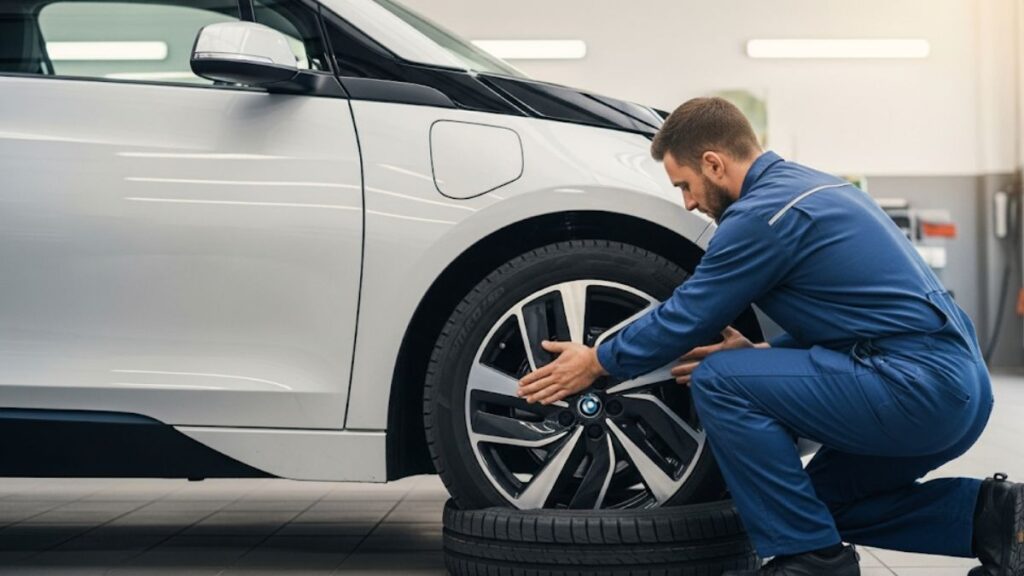
They also weigh more than internal-combustion-engine cars, because large battery packs are heavier than internal-combustion engines, and this extra weight puts more stress on tires and suspension systems.
1. Tire Maintenance
- Monitor Tire Pressure Monthly: Proper tire inflation is essential to all EVs for optimal range and safety. To get the appropriate PSI, consult your owner’s handbook.
- Rotate Tires Every 6,000-8,000 Miles: Tires will wear out at different times and rates because even on EVs, instant torque means the rear tires can wear more quickly.
- Opt for EV-Specific Tires: A handful of manufacturers design tires for EVs that can help increase range and decrease noise. Consider these when replacing tires.
2. Suspension Checks
- Check Suspension Components: The extra weight of EVs can place additional stress on already pressurized suspension parts such as shocks and struts. Get them checked annually, or if you have an uneven ride.
- Why It’s Important: A properly tuned suspension helps with handling and ride, particularly during long hours in the driver’s seat.
How Regular Cleans Can Help Your EV?
Washing your pure-electric and indeed its all-electric, petrol and diesel-powered relatives is more than just about looking smart: it saves vital components from decay and help you to retain their value.
- Keep It Clean: Dirt and salt can damage your sensors, too, through corrosion damage to exterior surfaces and sensors used for autonomous driving features.
- Clean the Charging port: Make sure the charging port is clear of dust and clean.
- Apply Ceramic Coatings or Sealants: They save up the paint and help in easy cleaning, preserving the resale value of your electric car.
What’s the Ideal Maintenance Schedule for an Electric Car?
EVs don’t adhere to a standard maintenance regimen like an ICE vehicle, but sticking to a loose schedule will keep your car in top shape. Here’s a tentative schedule, based on manufacturer recommendations:
Monthly:
- Check tire pressure and tread.
- Check your wiper blades and washer fluid.
- Wipe down the exterior and the charging port.
Every 6 Months:
- Rotate tires.
- Inspect brake pads and fluid levels.
- Check cabin air filters and change them out if necessary.
Annually:
- Get it checked out by a certified technician, and inspect the battery, cooling system, and suspension.
- Check for software updates.
Every 2-3 Years:
- Replace coolant (if applicable).
- Inspect high-voltage components for wear.
Find out what maintenance is required for your vehicle in your owner’s manual; service and maintenance intervals differ by manufacturer.
How to Choose a Qualified EV Technician?
EVs are this other beast knowledge-wise; you have to select the right technician.
- Check the Certifications: Make sure that the technician is certified by the manufacturer or a qualified entity such as the National Institute for Automotive Service Excellence (ASE).
- Take it to the Factory Service: Official service locations have the tools and software updates for your vehicles.
- Check Reviews: Search for service centers with good customer reviews who are familiar with your particular EV.
Why Home Charging Setup Matters?
A reliable home charging arrangement will help keep your EV free from wear and tear and process cheaper than public charging.
- Upgrade to a Level 2 Charger: Level 2 Chargers are quicker and more efficient than your average 120V outlet. Call an electrician licensed to work in your community to have the pool’s pump and filter installed correctly.
- Smart Chargers: With the help of smart chargers, you can time your charging and charge your car during the non-peak hours, thereby saving on the electricity bill.
- Examine Cables on a Regular Basis: Make sure to examine cables for signs of fraying or any type of damage, which could create charging problems or safety issues.
What are the long-term advantages to proper EV maintenance?
There are various advantages to putting in the time and elbow grease to keep your car in tip top condition, and these are no different for electric vehicles:
- Cost Reduction: With preventative maintenance, the risk of costly repairs, particularly on the battery or electric motors, is greatly diminished.
- Eco-Friendly: Proper maintenance for your EV means it uses less power, and your carbon footprint is reduced.
- Safety and Reliability: With a regular check-up at the car doctor, your car will be safer (it will be less likely to break down) and more reliable.
- Increased Resale Value: There’s a significant upside to having a record of maintenance for your EV, as it enhances its attractiveness to future buyers.
Conclusion
There’s a lot to consider when caring for an electric car that you don’t have to think about with a car based on gasoline. By paying attention to battery care, software updates, tire maintenance, and keeping it clean, you can help keep your EV humming along.
Stick to a regular maintenance schedule, hire reputable techs, and set up home charging for maximum reliability and efficiency in the long haul. With just a little bit of know-how, your electric car will continue to be a sustainable, economical, and fun part of your life for a long time to come.
To learn more about EV upkeep or to look at certain models, check out manufacturer websites or ask at certified service centers. Keep ahead of the curve, and your electric car will thank you with years of silent, green driving.